The Sports Science Behind CrushLog's Training Analytics
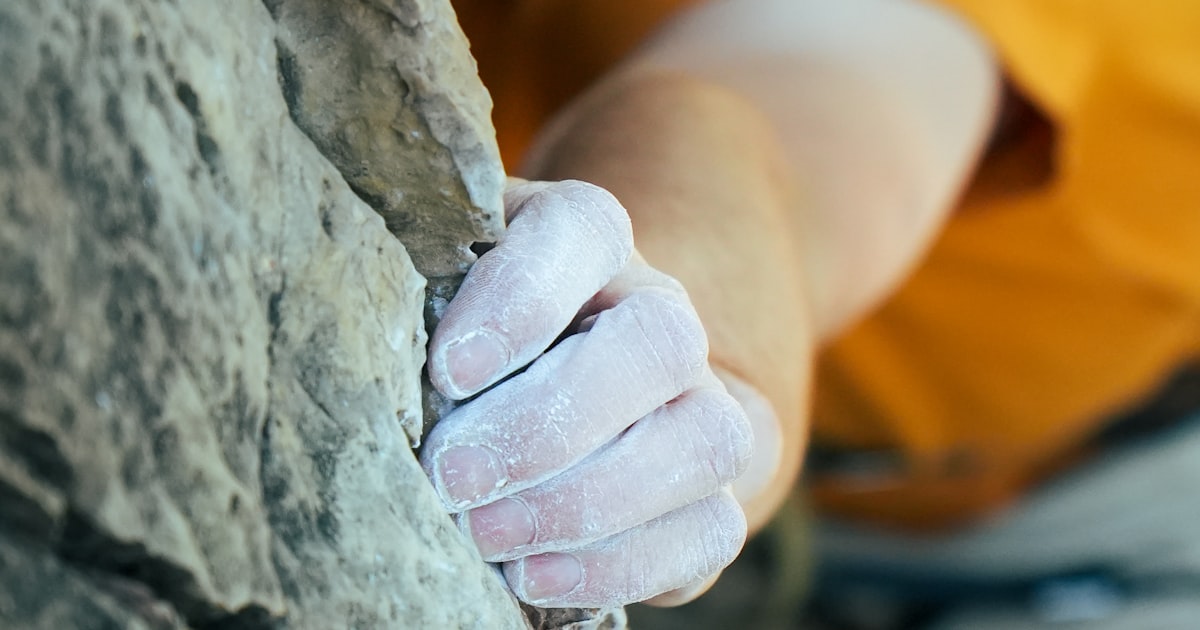
Most climbing apps count your sends. CrushLog Pro tries to keep you from getting injured.
When we built the training analytics in CrushLog Pro, we didn’t invent our own metrics. We took established sports science models — the same ones used in professional team sports, strength training, and endurance coaching — and adapted them for climbing. Here’s how they work and why they matter.
The Problem With “Just Climb More”
Climbing culture has a complicated relationship with training science. The advice most climbers get is some variant of “climb more” or “just project harder.” For many, that works — until it doesn’t.
The pattern is familiar: you find a rhythm, you’re climbing three or four days a week, you’re progressing. Then you add a fifth day because you’re psyched. A week later your fingers feel tweaky. Two weeks later you have a pulley strain and you’re off the wall for three months.
The frustrating part: you were doing everything right. More climbing was making you better. The problem wasn’t the direction — it was the dosage. You crossed a threshold your body couldn’t recover from, and you had no way to see it coming.
That’s the gap training analytics fills. Not telling you what to train, but telling you how much is too much — and catching the warning signs before your body does.
ACWR: The Injury Model
The Acute:Chronic Workload Ratio (ACWR) is the foundation. Developed in cricket and rugby research, it’s now used across professional sports to predict soft tissue injury risk. The core idea is simple: injuries happen when your recent training load spikes relative to what your body is adapted to.
How It Works
ACWR compares two numbers:
- Acute load — what you’ve done in the last 7 days
- Chronic load — what you’ve been doing over the last 28 days (your baseline)
Divide acute by chronic and you get a ratio:
ACWR = Acute Load (7-day) / Chronic Load (28-day)
The ratio tells you whether your recent training is within the range your body can handle:
| ACWR | Zone | What It Means |
|---|---|---|
| Below 0.8 | Undertraining | You’re doing less than your body is adapted to. Detraining risk. |
| 0.8 – 1.3 | Sweet spot | Optimal. Your body is being challenged within recoverable limits. |
| 1.3 – 1.5 | Caution | Your recent load is spiking. Monitor closely. |
| Above 1.5 | Danger | High injury risk. Your acute load has outpaced what you’re adapted to. |
The classic injury scenario: a climber who’s been doing three easy sessions a week (low chronic load) goes on a week-long climbing trip and sends hard every day (high acute load). ACWR spikes to 1.8. Three days later, a finger pulley pops. The trip wasn’t the problem — the spike was.
Training Load in Climbing
In team sports, training load is typically measured in distance, sprint counts, or GPS-tracked intensity. Climbing doesn’t have those metrics, so we calculate load from what CrushLog already tracks:
Session Load = Σ (gradePoints × attemptFactor × finishMultiplier)
Each variable captures a different aspect of physiological stress:
- Grade points — harder climbs put more stress on tendons and muscles. A V8 is not twice the load of a V4; the relationship is non-linear.
- Attempt factor —
1 / √(attempts). Your first attempt on a route is the hardest on your body. The tenth attempt, when you know every move, is less stressful even if you still fall. - Finish multiplier — an onsight (1.5×) is more stressful than a redpoint (1.0×), which is more stressful than a repeat (0.5×). Projects where you fall on the crux (0.3×) contribute less per attempt.
CrushLog calculates this automatically from your logged climbs. You don’t enter any numbers — you just log your sends and falls like you normally would.
Why EWMA, Not a Simple Average
We use an Exponentially Weighted Moving Average for the chronic load instead of a simple 28-day average. The difference: EWMA gives more weight to recent days. Your fitness from three weeks ago has decayed; yesterday’s session is still contributing to your current adaptation.
EWMA_today = Load_today × λ + EWMA_yesterday × (1 - λ)
This matters in practice. If you took a week off two weeks ago, a simple average would still count those zero-load days equally. EWMA correctly reflects that your body has partially re-adapted since then.
The Pentagon Model
ACWR tells you about load spikes. But training is multidimensional — a climber who trains frequently at low intensity has a very different profile from one who trains infrequently at high intensity. Both might have the same total load.
The Pentagon Model — based on Italian climbing coaching methodology (the Pentagono dell’Allenamento) — captures five training dimensions simultaneously:
| Dimension | What It Measures | How CrushLog Calculates It |
|---|---|---|
| Frequency | How often you train | Sessions per week vs. your target |
| Intensity | How hard you climb relative to your max | Average grade as percentage of your personal best |
| Volume | Total work done | Weekly climbs vs. your target |
| Recovery | Rest adequacy | Actual rest days vs. recommended |
| Velocity | Movement efficiency | Flash rate + onsight rate |
Plotted as a pentagon (radar chart), each dimension is a spoke from 0 to 100%. A balanced climber has a roughly even pentagon. An imbalanced one has spikes and dips — and the shape tells you exactly what to adjust.
A climber with high frequency, high volume, but low recovery is heading for overtraining. A climber with high intensity but low velocity is grinding on projects but not building the fluency that comes from onsighting easier terrain. You can see these patterns at a glance.
Periodization: The Inverse Relationship
One of the key insights the pentagon reveals is the inverse relationship between volume and intensity across training phases. As a season progresses toward a performance goal (a trip, a comp, a project send), volume should decrease as intensity increases:
Bars = Volume, Line = Intensity
| Phase | Volume | Intensity | Duration | Goal |
|---|---|---|---|---|
| Base | High (80-100%) | Low (50-70%) | 4-8 weeks | Build capacity |
| Build | Medium (60-80%) | Medium (70-85%) | 3-6 weeks | Develop strength |
| Peak | Low-Med (40-60%) | High (85-95%) | 2-4 weeks | Maximize performance |
| Taper | Low (20-40%) | High (90-100%) | 1-2 weeks | Shed fatigue |
| Competition | Minimal | Maximum | Event day | Send |
Most climbers intuitively taper before a trip — they climb less in the days before. What they don’t do is structure the weeks before that. The pentagon tracks whether your volume-intensity balance matches your current training phase.
Volume-Intensity Bands
This is the most nuanced piece, and it’s where the science gets genuinely interesting.
At any given intensity level, there’s a range of training volume your body can handle. Too little and you don’t adapt. Too much and you can’t recover. The boundaries of this range have names in exercise science:
- MEV (Minimum Effective Volume) — the lowest amount of work that still produces adaptation. Below this, you’re just maintaining.
- MAV (Maximum Adaptive Volume) — the sweet spot where you get the best gains relative to fatigue.
- MRV (Maximum Recoverable Volume) — the ceiling. Above this, you accumulate more fatigue than you can recover from.
Here’s the critical insight: the band narrows as intensity increases.
Easy routes, 3 grades below max
MEV: 50 moves ←──── WIDE BAND ────→ MRV: 500+ moves
Huge margin for error"] B["Moderate Intensity (70%)
1-2 grades below max
MEV: 30 ←── MEDIUM BAND ──→ MRV: 150
Comfortable margin"] C["High Intensity (85%)
At/near onsight level
MEV: 15 ←─ NARROW ─→ MRV: 50
Tight margin"] D["Limit Intensity (95%)
Project grade
MEV: 5 ← VERY NARROW → MRV: 20
~15 moves of margin"] end A --> B --> C --> D style A fill:#e8f5e9,stroke:#2e7d32 style B fill:#e8f5e9,stroke:#2e7d32 style C fill:#fff3e0,stroke:#f57c00 style D fill:#fce4ec,stroke:#c62828
When you’re climbing easy routes (50% of your max), the gap between MEV and MRV is huge. You can do tons of volume and still recover. But when you’re limit bouldering (95% of your max), the band is razor-thin. A few attempts too many and you’ve crossed into overtraining territory.
| Intensity | Example | MEV | MRV | Margin for Error |
|---|---|---|---|---|
| 50% | Easy routes, 3 grades below max | 50 moves | 500+ moves | Massive |
| 70% | Moderate, 1-2 grades below | 30 moves | 150 moves | Comfortable |
| 85% | Hard routes, near onsight level | 15 moves | 50 moves | Tight |
| 95% | Limit bouldering, project grade | 5 moves | 20 moves | Very tight |
This is why the “just climb more” advice breaks down at higher grades. At V2, you can climb all day and recover. At V10, the difference between a productive session and an overtraining session might be five attempts.
How CrushLog Uses This
CrushLog plots your sessions on the volume-intensity band. Each dot is a session — its position tells you whether you were in the adaptive zone (good), near MEV (could do more), or near MRV (be careful).
The suggestion engine uses your band position to generate specific, actionable recommendations:
- Above MRV: “You’re 15% above your maximum recoverable volume. Your body needs 48-72 hours before your next hard session.”
- In the adaptive zone: “4 days of optimal training. Keep this consistency.”
- Below MEV: “You’re below minimum effective volume. Without more training, you risk detraining.”
It’s not a coach — it’s a dashboard that makes the invisible visible. The numbers that a sports scientist would calculate from your training log, calculated automatically.
What Coaches See
For coaches using CrushLog Pro, the same data powers a different view. Instead of your own pentagon and band position, coaches see all their athletes on one dashboard:
- Which athletes are in the adaptive zone
- Which are trending toward MRV (overtraining risk)
- Which have been below MEV for too long (detraining risk)
- ACWR trends over 4-8 week windows
A coach with ten athletes can see at a glance who needs a rest day prescribtion and who needs a push. The V-I band chart overlays all athletes on one graph — you can literally see your team’s training balance (or imbalance) in a single view.
The Limits of the Model
We’re transparent about what this can and can’t do.
What it does well:
- Detects load spikes that correlate with injury risk
- Tracks training balance across multiple dimensions
- Identifies when you’re in a productive training zone vs. spinning your wheels
- Gives coaches visibility into athlete workloads they couldn’t otherwise monitor
What it doesn’t do:
- Replace a coach’s judgment. The models are heuristics, not prescriptions.
- Account for life stress, sleep quality, nutrition, or mental state. An ACWR of 1.2 with three hours of sleep is not the same as an ACWR of 1.2 with eight hours.
- Work well with fewer than 3-4 weeks of data. The chronic load baseline needs history to be meaningful.
- Predict injury with certainty. ACWR is a risk indicator, not a crystal ball.
The goal isn’t to automate coaching. It’s to give every climber — even those without a coach — access to the same training load visibility that professional athletes get. And for coaches, it’s a tool that scales their attention across more athletes than they could manually monitor.
Try It
Training analytics are available in CrushLog Pro for Pro subscribers. The pentagon model and ACWR are included in the free tier with limited history. Full volume-intensity band analysis, coach dashboards, and suggestion engine are Pro features.
If you’ve been logging your climbs in CrushLog, your training data is already there. Turn on online mode, and the analytics appear.
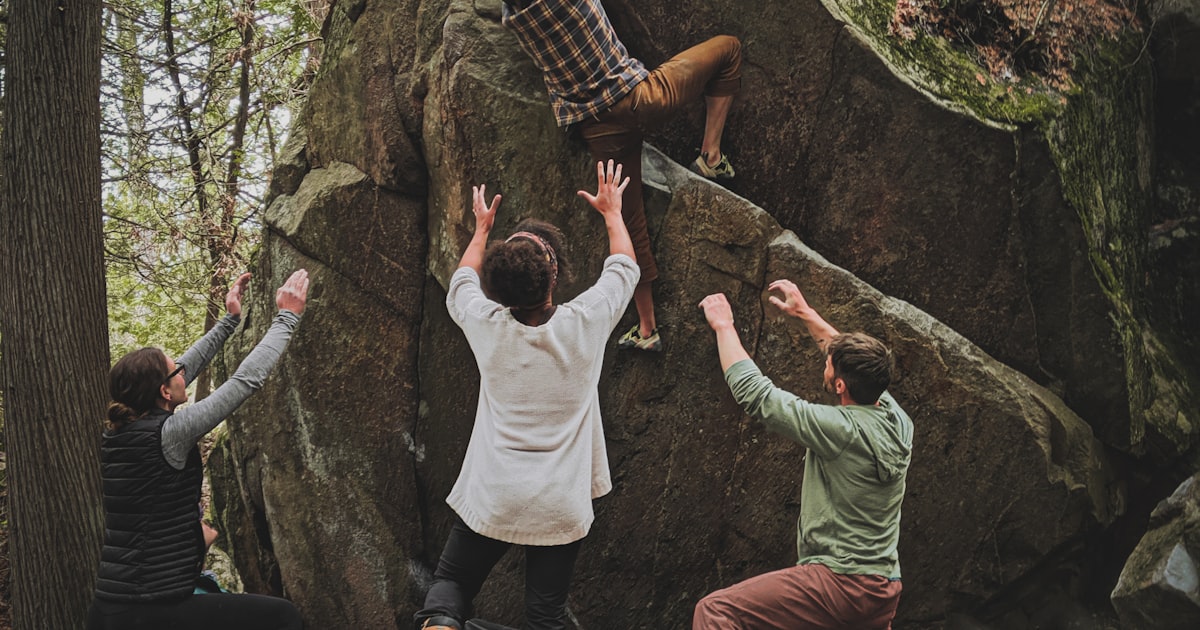
Cover photo by Creed Ferguson on Unsplash.
The ACWR model is based on research by Tim Gabbett and colleagues. The volume landmark framework (MEV/MAV/MRV) is adapted from Dr. Mike Israetel’s work at Renaissance Periodization. The pentagon model draws from Italian climbing coaching methodology. References: Science for Sport – ACWR, RP Strength – Volume Landmarks, Climbro – Workout Intensity in Climbing.